

Stronger Together: Pilates + Strength
ERP x SESSION
Stronger Together
If you live in New York, your body is already training whether you book a class or not. Five flights up to your apartment, a sprint for the G, a full grocery haul down Manhattan Avenue, eight hours hunched over a laptop. The question isn’t whether you move. It’s whether you’re building a body that can keep up.
That’s why we partnered with our friends at SESSION, a strength and conditioning studio we love sharing community with. This month, we sat down with SESSION trainer Stephanie White to talk about why Pilates and strength training work best together. With roots in dance and years teaching barre and Pilates-adjacent methods before returning to functional strength training, Stephanie blends strength fundamentals with Pilates principles in her coaching. She’s seen firsthand what happens when people stop choosing one and start doing both.
Pilates and strength and conditioning aren’t competing workouts. They’re two halves of the same goal, a body that feels good, moves well, and lasts.
Pilates builds control. Deep core strength, posture, mobility, balance, and the body awareness to move with precision.
Strength training builds capacity. Muscle, bone density, power, and the ability to handle real loads, whether that’s a barbell or a stroller up the subway stairs.
Together, they cover each other’s gaps. Pilates helps you lift with better alignment and fewer compensations. Lifting gives your Pilates practice more power and resilience.
For New Yorkers, that combination shows up everywhere: steadier knees on the stairs, a back that holds up through a long workday, and more energy for everything we actually do everyday.
Q&A with Stephanie White
Tell us a little about yourself! What does your training background look like, and how did you get into coaching?
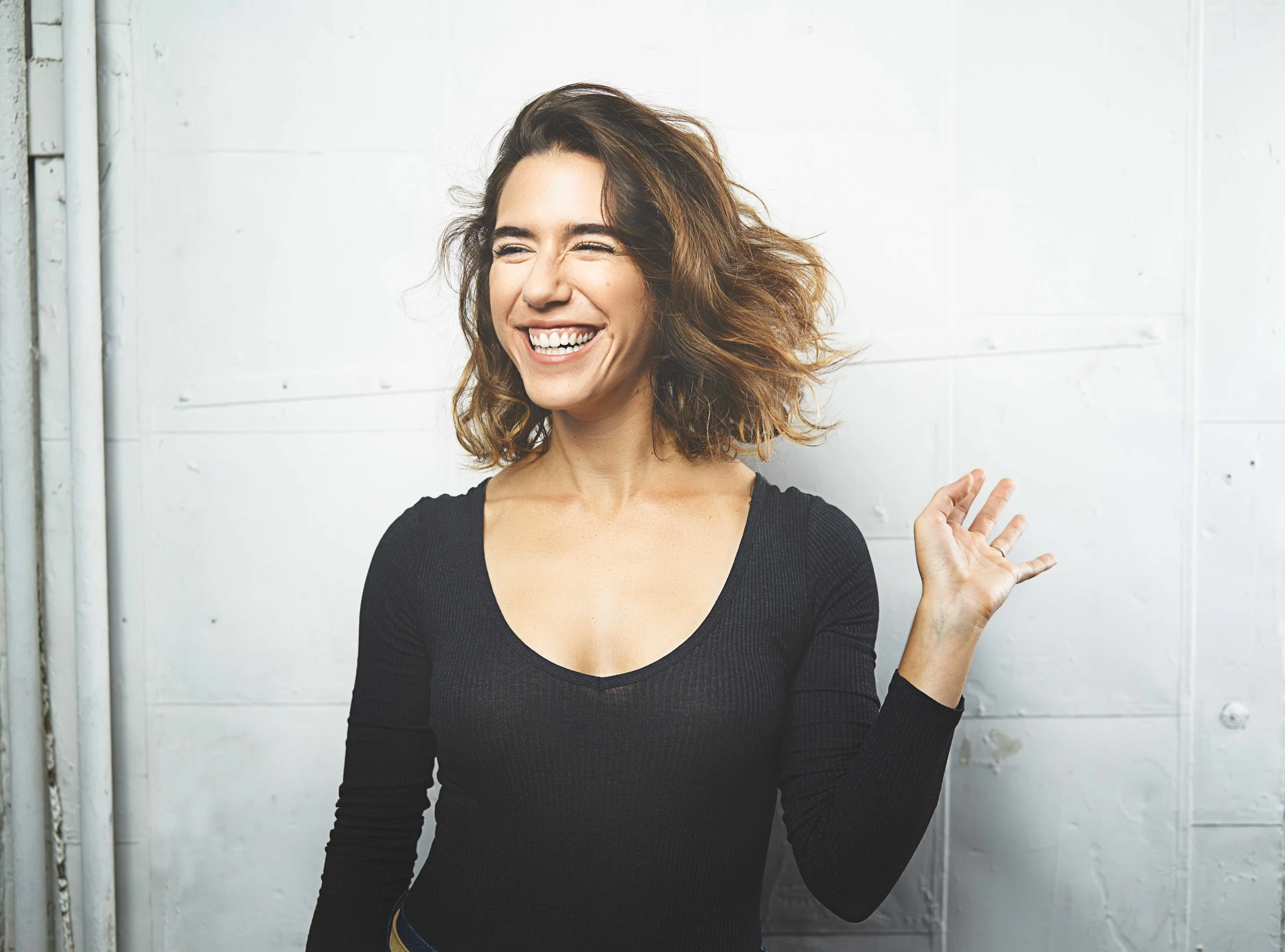
I got into coaching as a side hustle alongside performing, and eventually, it became my full-time gig.
My movement background is in dance, so my first job in the fitness industry was at a dance cardio studio. Since then, I’ve taught many of the barre/pilates adjacent modalities before coming back to functional strength training — something I’d always done myself and was excited to expand upon. For my own clients, I love mixing the foundations of strength training with pilates principles and getting the best of both worlds.
What does your own weekly movement routine look like right now?
There’s some flexibility, but a good week looks something like at least 3 solo lifts, 1–2 SESSION classes (usually something that includes cardio, since it’s more fun in a group environment), and 1–2 Pilates sessions.
I’m also always doing some sort of physical hobby. Most recently, that’s been Muay Thai, but I also love taking dance classes and roller skating.
I aim for at least two true full rest days, though that can be tough given the nature of the industry, how many physical activities I enjoy, and averaging 13,000 steps.
A lot of people think of Pilates and strength or conditioning work as opposites. What’s the biggest misconception you hear?
The biggest misconception is that you have to pick a side. I’ve never really understood the idea that different movement disciplines are at odds with each other, but I’m glad to see cross-training becoming more popular.
The more instruments you play, the better musician you become. The more sports you play, the more well-rounded an athlete you are. The more languages you speak, the better you can communicate. The same is true of movement — every discipline gives you a different set of tools to add to your arsenal.
If you only pick one, you’re leaving some gains on the table. Which is exactly why I’m so excited about this partnership!
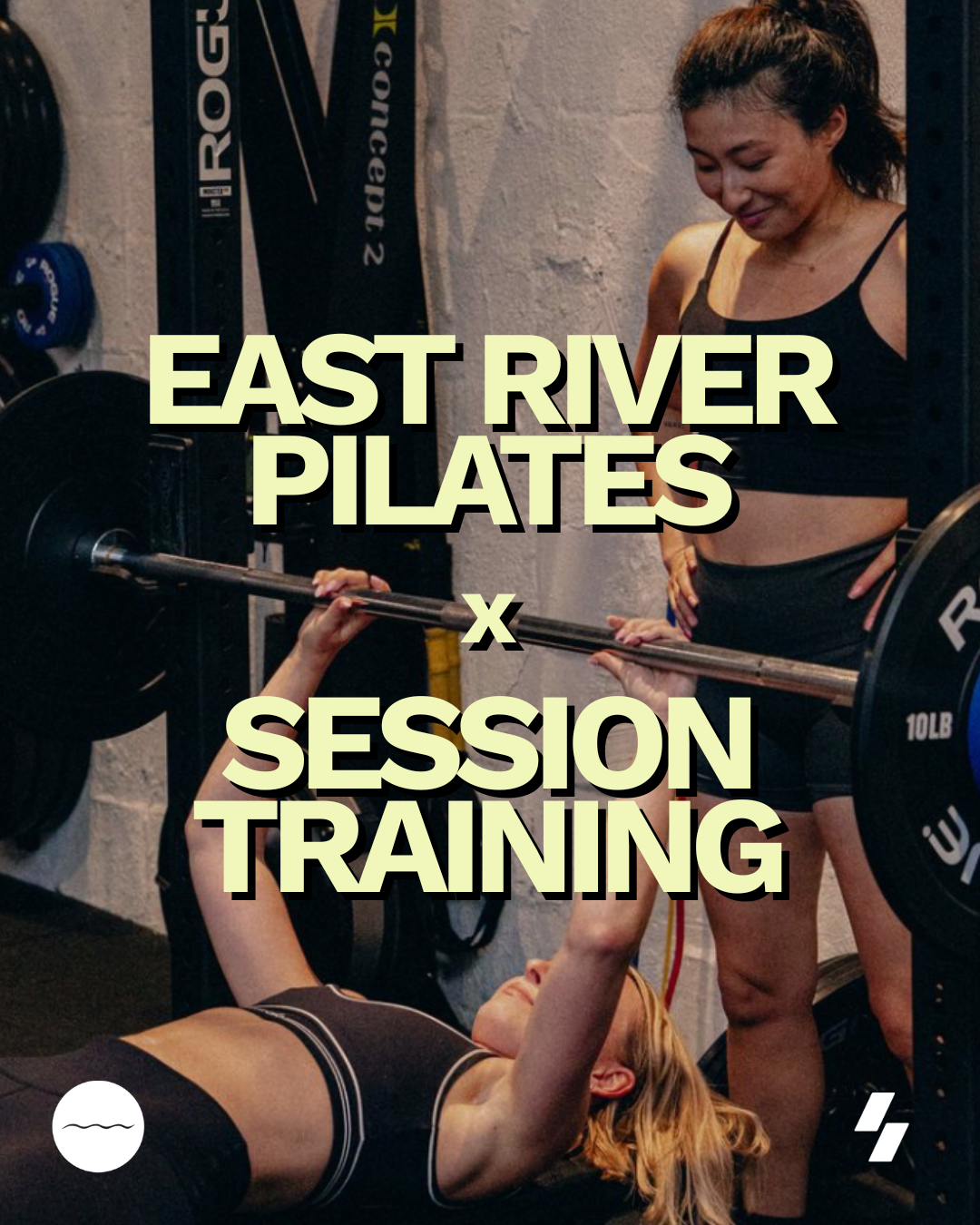
How does Pilates support strength and conditioning training, and what do strength and conditioning add to a Pilates practice?
Pilates is a perfect foundation for strength training. Control, breath, and alignment are prerequisites to move well with barbells and kettlebells, and also things you already practice in Pilates. The techniques might be a little different but the strategy is really similar.
And it works the other way, too. Strength training builds the strength to hold positions longer, add springs, and get more out of your Pilates practice. Plus, when you train, you get to work on power, which declines earlier and faster than maximal strength – so it’s an essential piece of capable and resilient.
There’s so much crossover between the two, and so much to gain from doing both.
New Yorkers walk, climb, carry, and sit at desks all day. How has cross-training helped you (or your clients) handle real city life?
I mean, just today I was walking home from Jubilee with three heavy bags of groceries, and one of them broke. Instead of going straight home, I stopped to pick up a couple more things. I wasn’t happy, but I was proud.
So, carries are in everyone’s program — you can’t escape them in New York!
Some of my favorite success stories are the ones that sound like, “I had to take my dog to the vet in their carrier, and I usually have to stop every other block, but this time we made it all the way there without stopping!”
That’s what it’s all about. Training makes life easier.
Any advice for someone who’s only ever done one and feels intimidated by the other?
Just do it! Bring a friend, chat up the instructor / coach, ask questions, pay attention, and have fun. You don’t have to be good to start.
Lightning round: favorite exercise, favorite post-workout spot in Brooklyn, and what keeps you motivated on low-energy days?
Single-leg Romanian deadlift, Othership, carbs.
What are you most excited about with the ERP x SESSION partnership?
I’ve been trying to get the Pilates crowd to lift and the lifters to do Pilates for a while now, so I’m personally very excited to see these worlds come together.
I’m excited for more people to discover something new, expand their approach to movement, and realize the skills you gain in one carry over to the other and the more you get out of both in the process.
Try It: A Simple Cross-Training Week
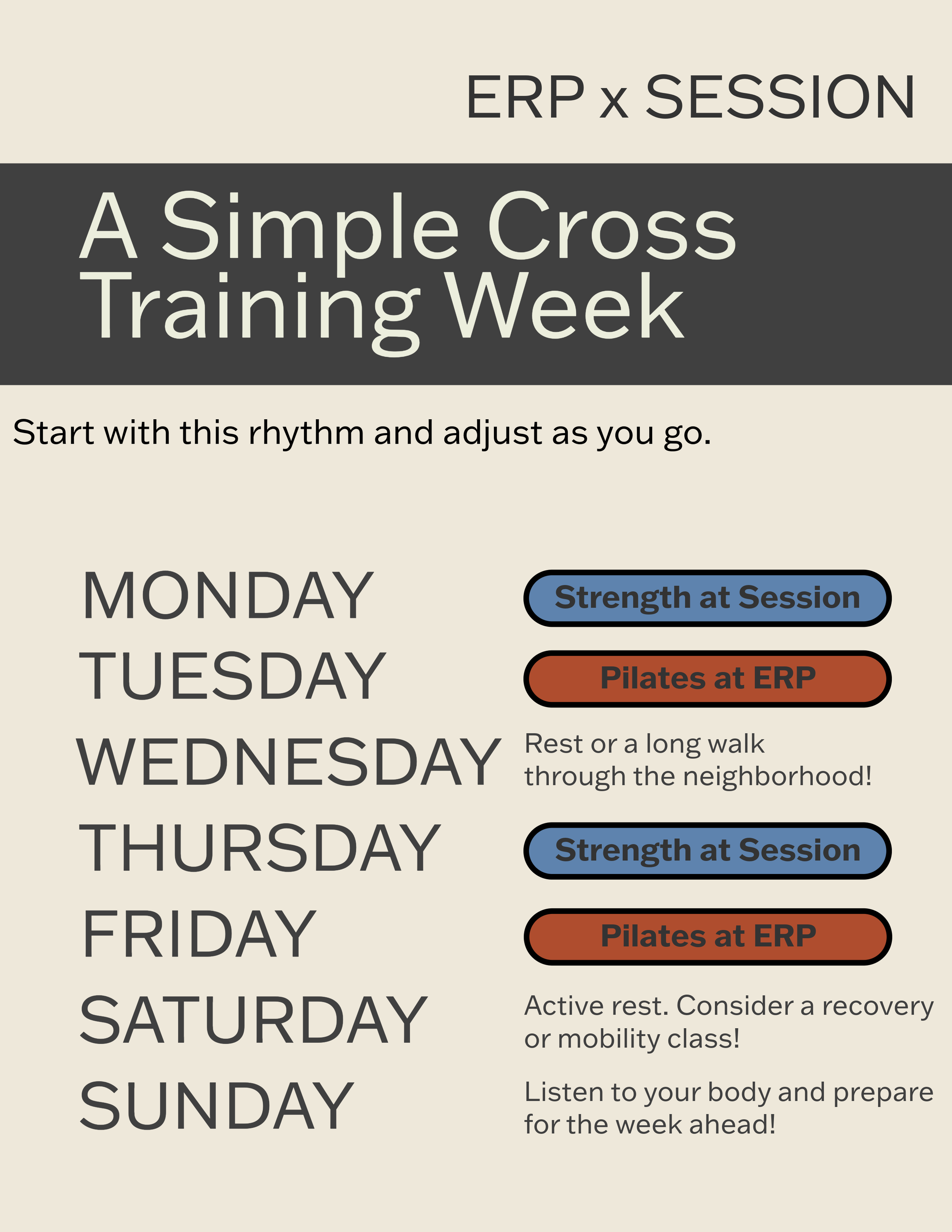
You don't need to overhaul your schedule. Start with a rhythm like this and adjust as you go:
Stephanie's own week includes at least three lifts, a SESSION class or two, one to two Pilates sessions, and two full rest days. Two of each is a strong, sustainable place to start. Listen to your body, and lean on your instructors and coaches for guidance on what's right for you.
Book Your Cross-Training Week
Our partnership with SESSION makes it easy to train both ways, close to home in Brooklyn. Members of each studio get 10% off 5 and 10 class packs at the other, up to 3 times per year.
Stronger, steadier, and ready for whatever the city throws at you. We'll see you in the studio.