

On Art, Movement, & Everything In Between
The space, places, and projects our Pilates life meets our outside life.
By Josephine Huang
Marketing Coordinator and Teacher
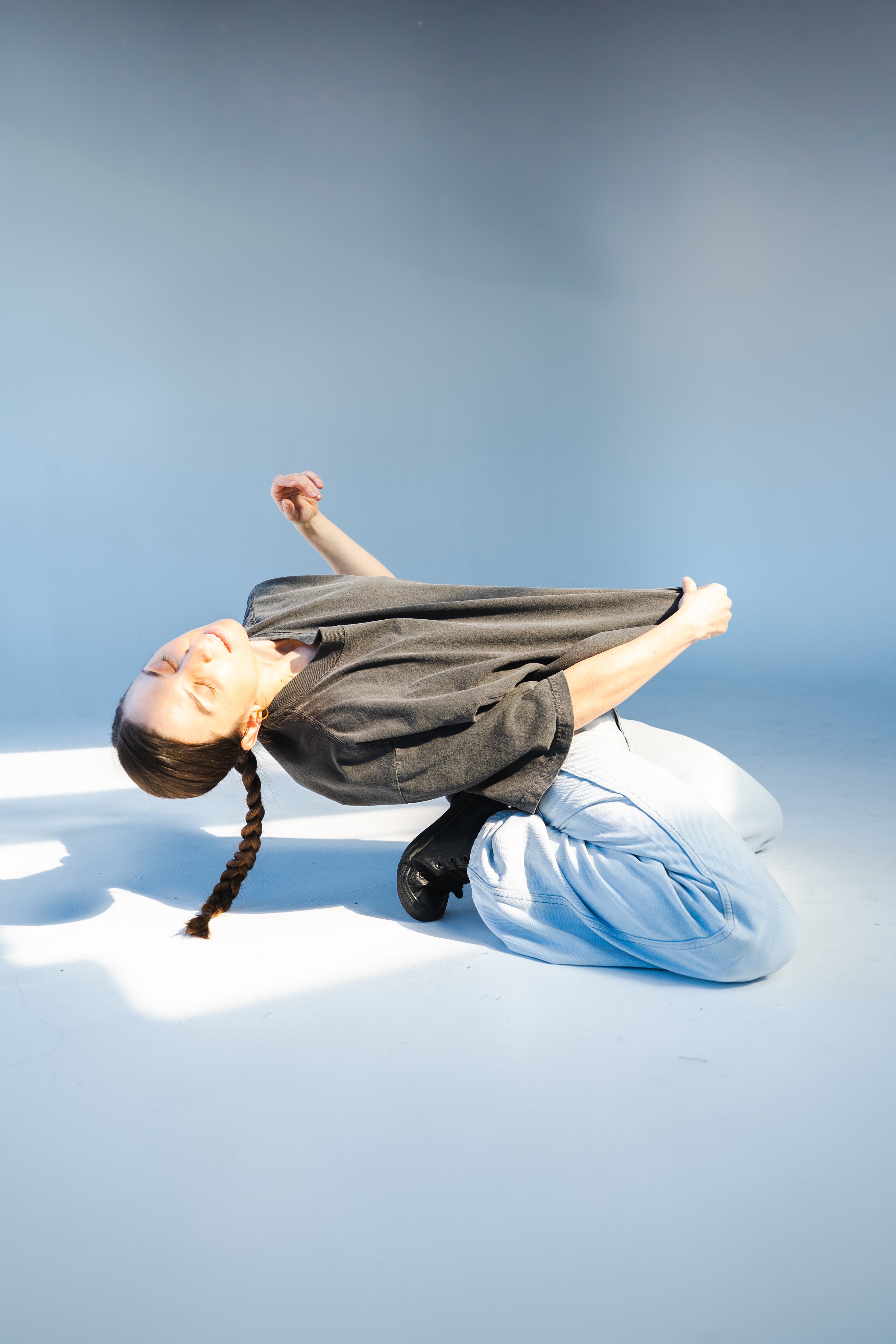
ERP Senior Teacher Nicole Von Arx
At East River Pilates, we've always believed that movement is connected to everything. The way you breathe on the reformer, the way you learn to listen to your body, the way you find stillness inside effort - it shows up everywhere. In your work, your art, your relationships, your sense of self. We wanted to celebrate that. This series is a look at the creative lives of the people who teach here: who they are outside the studio, what they're making, and how movement weaves through all of it. We hope it introduces you to some people you already know in a whole new way.
Moving Through the World: A Conversation with Tommy Bo
If you've taken a class with Tommy Bo, you already know he brings something particular into the room: a kind of full-body presence, a quiet attentiveness, the sense that he's genuinely with you. What you might not know is that the same qualities that make him an exceptional teacher are the ones that just carried him through six hours of Shakespeare eight times a week at the Public Theater.
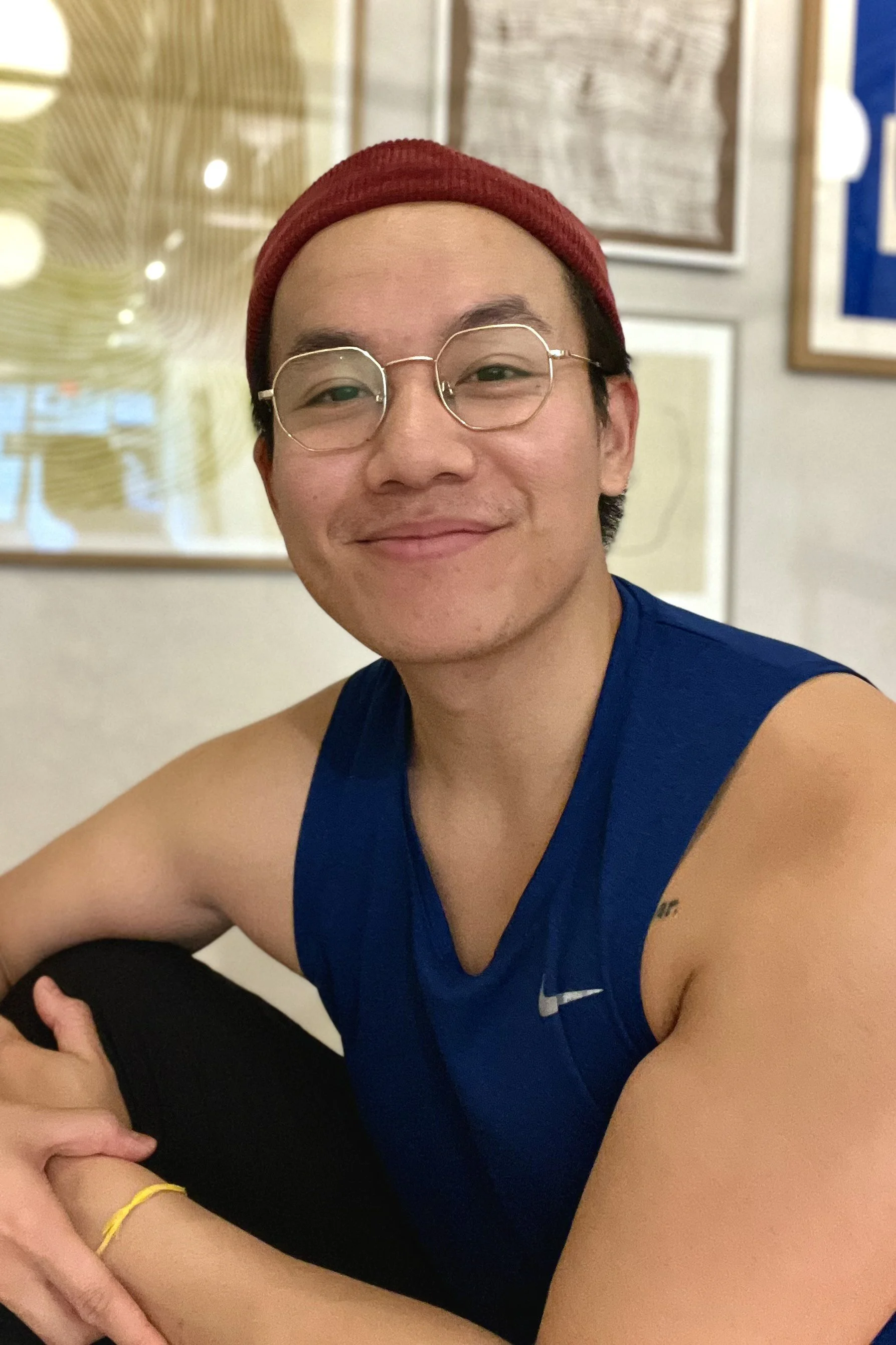
Tommy Bo is Certified Teacher at East River Pilates. Keep an eye out for his CBS appearance this fall, and follow along on his continued journey as a performer, coach, and all-around force of nature.
Tommy is a movement professional and actor based in Brooklyn, and he recently closed NAATCO's Henry VI, his first professional Shakespeare production, on one of the most storied stages in New York. It was, by any measure, a marathon. "I learned what it means to lead with thought, live moment to moment, and build the endurance to power through a six-hour epic," he says. Working alongside some of the most legendary Asian actors in NYC, Tommy found himself inside a production that demanded everything: physical stamina, emotional openness, and the ability to stay present across an entire day of performance.
He's not slowing down. This fall, he'll appear in an episode of a new CBS series, and in the meantime, he's deep in his running coach and personal training certifications, because, as he puts it, he wants to give back to his ERP community.
On what Pilates gives an actor
For Tommy, the connection between Pilates and acting isn't abstract; it's practical and deeply felt. "We are creatures of habit, and so are the characters I play," he explains. "They all have their own nuances and characteristics that make them distinctly unique in the world they live in." A soldier moves differently than a drag queen. A king holds his body differently than a servant. Getting into those distinctions requires a physical freedom that doesn't happen by accident.”
“To be able to prepare my mental and physical body with Pilates provides me with the freedom to live freely and explore my characters and stories without restriction." It's less about building strength for its own sake and more about clearing away tension and habit, so that when Tommy steps into someone else's life, there's room to actually inhabit it.
On breath, heartbeat, and being moved
Ask Tommy about a moment when movement unlocked something in his acting, and his answer goes deeper than a single anecdote. "I'm really influenced by the breath and heartbeat of my work," he says, "which has been shaped by my movement practice." It's the kind of answer that makes you realize his Pilates practice and his artistic practice aren't two separate things he's trying to balance. They're the same conversation, happening in the same body.
On community
Tommy teaches because being in a room full of people matters to him. "Inspiration is all around us," he says, "so being able to teach while learning from folx who come from all different walks of life is an honor and a privilege." For someone whose creative work is about embodying other people's lives, a studio full of humans with different stories isn't background noise. It's source material, and it's connection.
In one sentence
We asked Tommy to describe what Pilates feels like, in a sentence, the way an actor would.
"To experience one thought at a time, for the first time."
We couldn't have said it better.
How and Why Bodies Move: A Conversation with Nicole Von Arx
Nicole is not interested in fitting anyone into an ideal. That philosophy runs through everything she does, from the way she teaches a Pilates session to the way she runs rehearsals with her dance company to the way she's currently spending a year interviewing teenagers about freedom of speech. What ties it all together is a belief that the best things happen when people feel like active participants rather than subjects.
Nicole is a Swiss-British choreographer and the founder of NVA & Guests, a contemporary dance-theater company based in Brooklyn. She started the company in 2014 as a platform for her own choreographic voice and as a gathering point for other dance artists and emerging choreographers to connect through professional workshops. Her work is highly physical, weaving together dance, theater, text, humor, and audience interaction, and it tends to ask big questions in visceral ways.
Her current project is called YOUTH, and it might be her most ambitious yet. The work explores freedom of speech, misinformation, education, and what it means to think independently. Over the next year, Nicole will be traveling between the US and Switzerland, interviewing teenagers and educators, and those real conversations will become the creative material itself. The project recently completed its first research residency at James Madison University, and Phase One comes to New York City this fall.
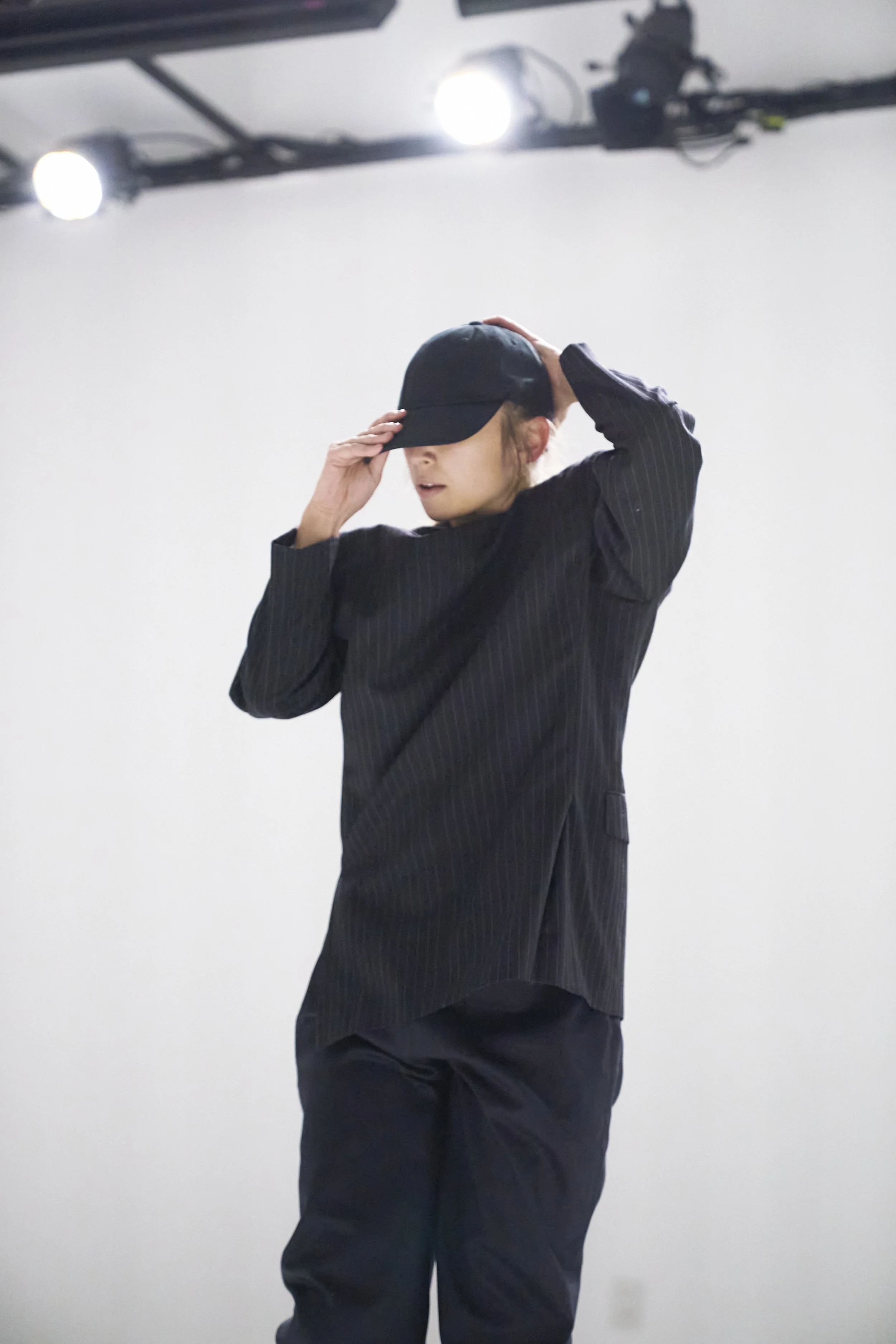
Nicole is a Teacher Mentor at East River Pilates and is the founder of NVA & Guests. Phase One of YOUTH comes to New York City this fall. https://www.nvonarx.com/
On teaching and choreographing: two sides of the same curiosity
It would be easy to imagine Pilates and dance-making as separate professional lives requiring a hard mental reset between them. Nicole doesn't see it that way. "They definitely feed each other," she says. "Teaching Pilates to a wide range of people reminds me that every body is different. There's never one perfect cue or one perfect exercise. It keeps me curious and makes me a better communicator."
The distinction she draws is a subtle but important one: "Pilates gives me a much deeper understanding of how bodies function, while choreography allows me to think about why they move." Both questions matter. Together, they make her unusually good at both things.
On meeting people where they are
As a choreographer, Nicole spends a lot of time watching, noticing small shifts, recognizing patterns, understanding when someone needs to be pushed and when they need to be released. That same attentiveness shapes her teaching. "I'm less interested in asking someone to fit into an ideal and more interested in helping them discover what works best for their body," she says. "I also think a lot about my audience's experiences when watching our shows. It's taught me to notice small changes, recognize patterns, and understand when people need a challenge, a release, or when they need to be guided."
It's the kind of presence that's harder to teach than any exercise.
On what Pilates gives a choreographer
For Nicole, who creates a lot of intricate partnering work, Pilates has been foundational in a specific way: precision. "It teaches control without tension and strength without sacrificing mobility," she says. But perhaps more importantly, it's reframed how she thinks about effort itself. "As dancers, we're often encouraged to push harder and do more. Pilates reminds me that efficiency is just as important as effort. The better you understand how your body is working, the more freedom you have to be expressive and take creative risks."
Longevity, too. Pilates has helped her think about a career that lasts, not just a performance that lands.
On what her dancers have taught her
The best teachers are always also students. For Nicole, that lesson has come clearly from her dancers, who arrive with different backgrounds, cultures, and lived experiences. "I've learned that the best ideas often come from our conversations," she says. "Creating space for questions and exchange almost always leads to a better and clearer process."
She's carried that directly into her teaching. "I encourage people to be curious about what they're feeling rather than simply trying to get an exercise 'right.' I think people learn more, and enjoy moving more, when they feel like active participants in the process."
Which, not coincidentally, is also exactly how she makes her work.
The World Is Our Inspiration: A Conversation with Jet Jameson
Jet will be the first to push back on the image of the writer as a solitary, hunched, eye-contact-avoiding creature. "I find most of us to be the chattiest people you'll ever meet," she says, laughing. "After all, the world is our inspiration and words are our work, we've got to talk."
Jet is a writer and teacher currently studying Publishing and Editing at Columbia University, where she's also deep in her second manuscript. She writes personal essays and long-form fiction, and despite her best efforts to resist it, they all end up being about love. "I guess you could say I write romance," she admits, "despite my best efforts."
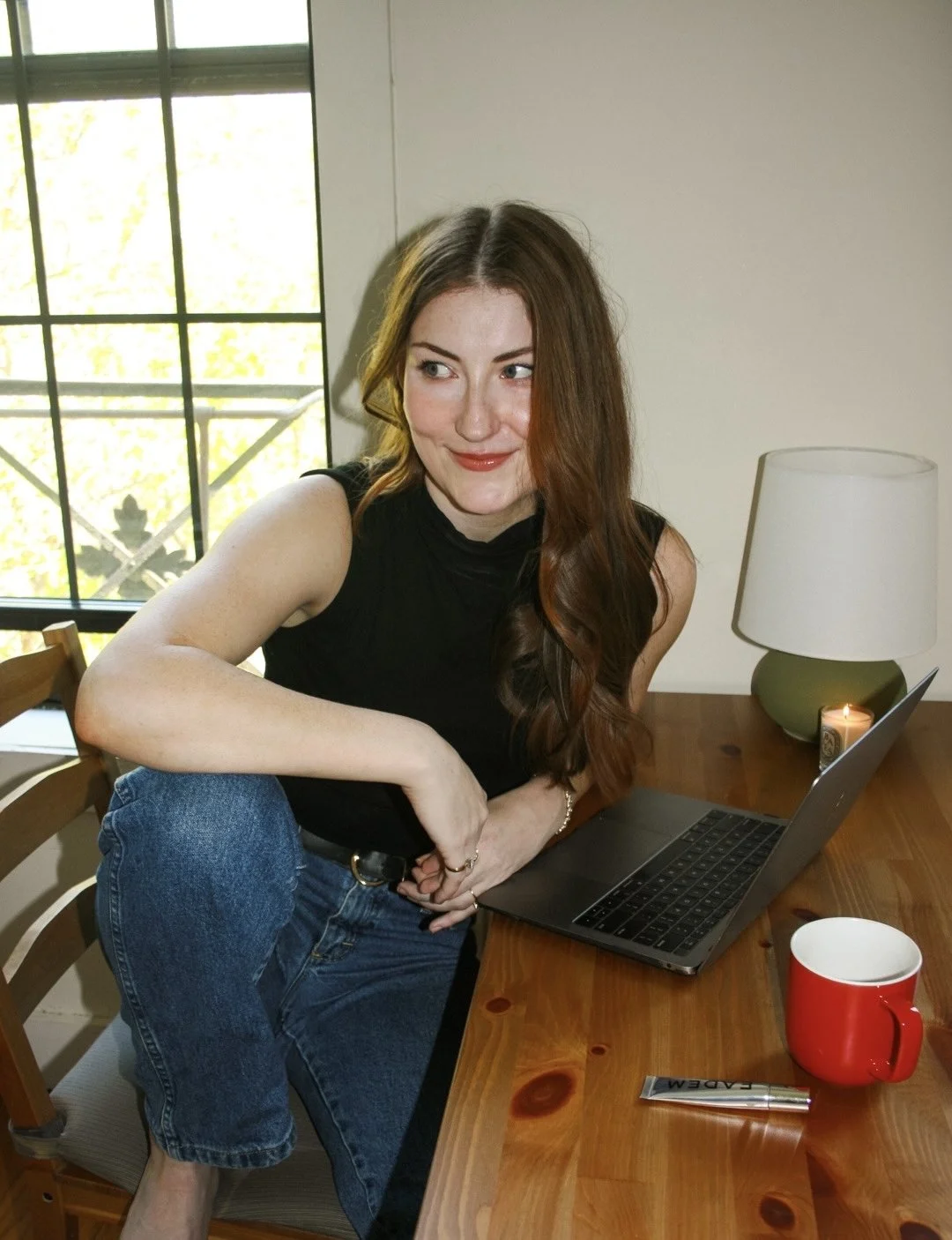
Jet is a Certified Teacher at East River Pilates and is currently completing her second manuscript. Read her work at jetjameson.com and follow along on her Substack, Jet Trails.
On writing and moving, and why they're not so different
There's a well-worn image of the writer pinned to their desk, wrestling a sentence into submission. Jet's version looks a little different. "Oftentimes when writing, I feel the urge to stand up, walk around, get upside down, or get blood flowing to my brain," she says. She's noticed she's not alone in this. Many of the writers she knows are former dancers, avid runners, movers of some kind. "There's an argument to be made that a writer's work in part, is to synthesize the corporeal into words."
Which means that if you spot Jet on a reformer at Brian's 1:30pm class, there's a good chance she's not just working on her body. She's probably unsticking a chapter.
On ten years of teaching, and all the characters it's given her
Jet has been teaching Pilates for a decade, and the studio has quietly become one of her richest sources of material. "From the clients I've met over my ten years of teaching to sensitivity trainings with ERP, I've found new ways to craft characters and work words," she says. Every person who comes through the door carries a story: a way of holding themselves, a way of breathing through effort, a way of showing up. For a writer who works in the specific textures of human experience, that's not just community. It's research.
On why writers belong at ERP
Jet has been making the case to her Columbia cohort: come to East River Pilates. "I think they'd make fast friends with much of our community in the moments between class times," she says. The studio, she's found, rewards the same instincts that writing does: curiosity, attentiveness, a willingness to be in your body and not just your head. For a program that asks so much of the mind, it turns out the reformer is pretty good company.
In one sentence
We asked Jet to describe what Pilates feels like, in a sentence, the way a writer would.
"Like the confluence of creating space for your body, while also challenging yourself to push past bounds, you didn't know you'd set for yourself."