Movement Through Motherhood
A Practice That Grows With You
By Kimmy Smith, Founder, East River Pilates
Before we get into it, I want to acknowledge that parenthood takes many forms, whether through birth, surrogacy, adoption, or other paths, and each experience carries its own relationship to the body and to movement.
With that said, I want to say something gently, because I think a lot of mothers who have given birth need to hear it: your body is not something you need to ‘get back’ after pregnancy.
Like how you can never step into the same river twice, motherhood doesn’t ask you to return to who you were before, but instead invites you to meet yourself somewhere new. That experience can feel beautiful, unfamiliar, and at times completely disorienting, often all at once. If you’re reading this as a mother, you’ll likely know exactly what I’m talking about. Movement, if it’s going to stay with you through all of that, has to shift too.
This month’s Journal is a reflection on movement through this season of life, and on finding ways to stay connected to your body while also celebrating the wild and wonderful journey of pregnancy, postpartum, and everything that comes after, including how it can shape the way we live, work, and move through the world.
Movement Has to Change, Because You Do
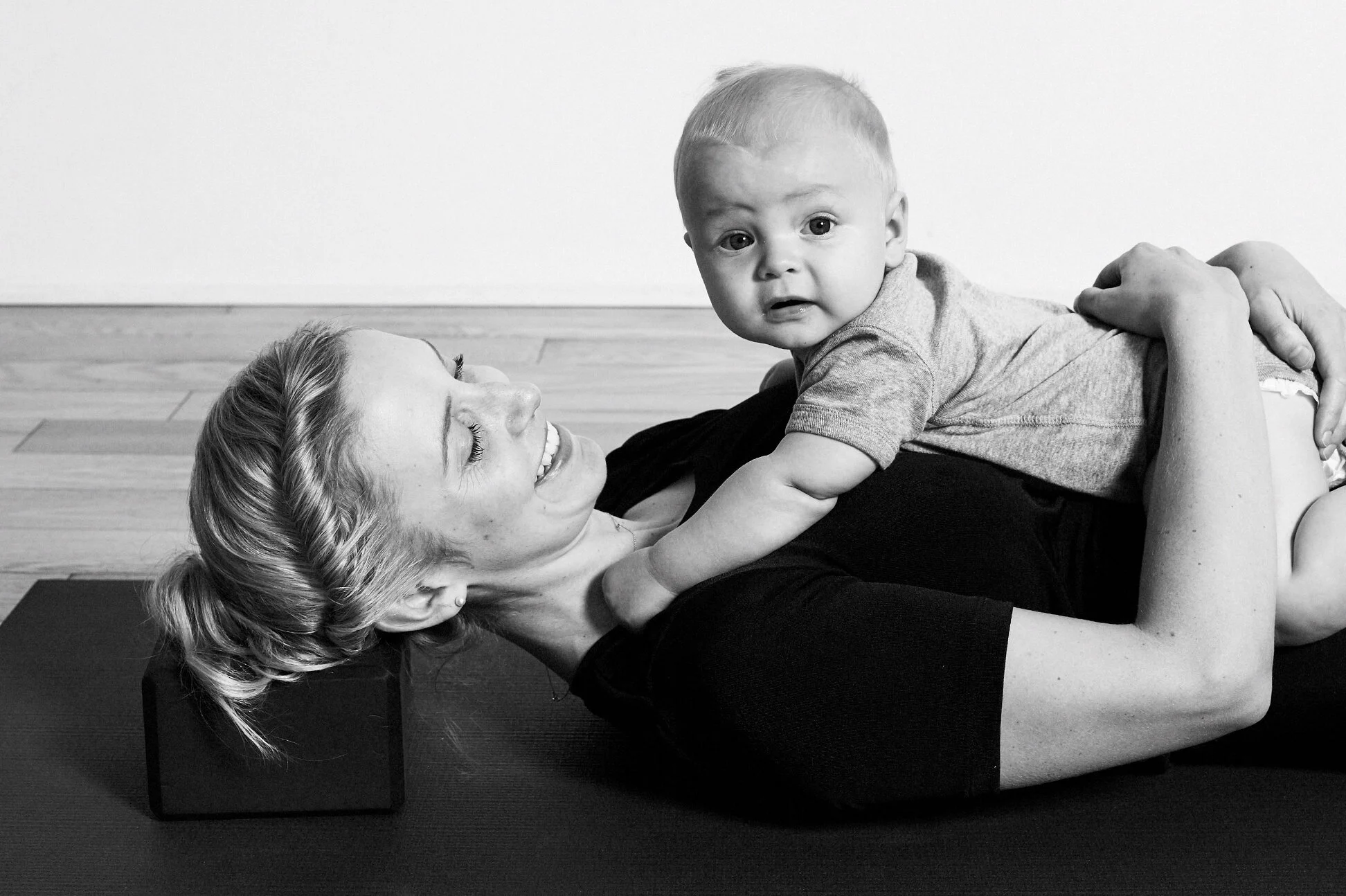
Flashback to when I first became a mother with Woody, who is now somehow 8 years old and convinced he needs a motorbike.
There are certain seasons in life where your relationship with your body changes quickly, and pregnancy is one of the most obvious ones. Postpartum is another, but what’s less talked about is how that transition continues long after those early months pass.
What you need from movement before pregnancy might look nothing like what you need during it. And what you need while caring for a newborn, or running after a toddler, will likely shift again. Over time, the goal begins to move away from doing more and becomes something much simpler, and much more important: staying connected to yourself, to regular movement rituals, whatever they may be, and to the community around you.
How Pilates Can Support You in This Season
One of the reasons Pilates can be so supportive through motherhood is that it’s designed to adapt.
Before pregnancy, it might feel like structure, strength, and even a way to connect and meet people. During pregnancy, it becomes more about support, stability, and breath, especially as your body changes in ways you can’t always predict. Postpartum, it shifts again, often into something slower and more intentional, where the focus is on rebuilding, healing, and learning how to trust your body again.
And then beyond that, it becomes something else entirely. It becomes a practice you can actually sustain, not something you have to force, but something you can return to, even when your schedule doesn’t make sense, your energy is low, or a ‘full workout’ simply isn’t realistic.
To be completely candid, as I write this, I’m 16 months postpartum with my third child, and my movement right now looks very different than it once did. Most weeks, I’m typically doing some form of functional strength training at the gym (I’m working toward doing 10 chin-ups by the time I’m 40), taking gentle walks, since my hip has made my newfound love of running a bit unrealistic lately, riding my bike to pick up my kids from school, and doing yoga to loosen my overly stiff upper back and support my mental health. Every now and then, I’ll squeeze in a Qi Gong class. And sometimes, of course, I’m doing Pilates.
And some days, I remind myself that lying on the couch breastfeeding is enough movement for one day.
I’m tired. The days can feel really long, and I’m juggling two jobs, so motherhood is sometimes the most overwhelming part of my day. But staying connected to my body, in whatever way I can, is what helps me move through it.
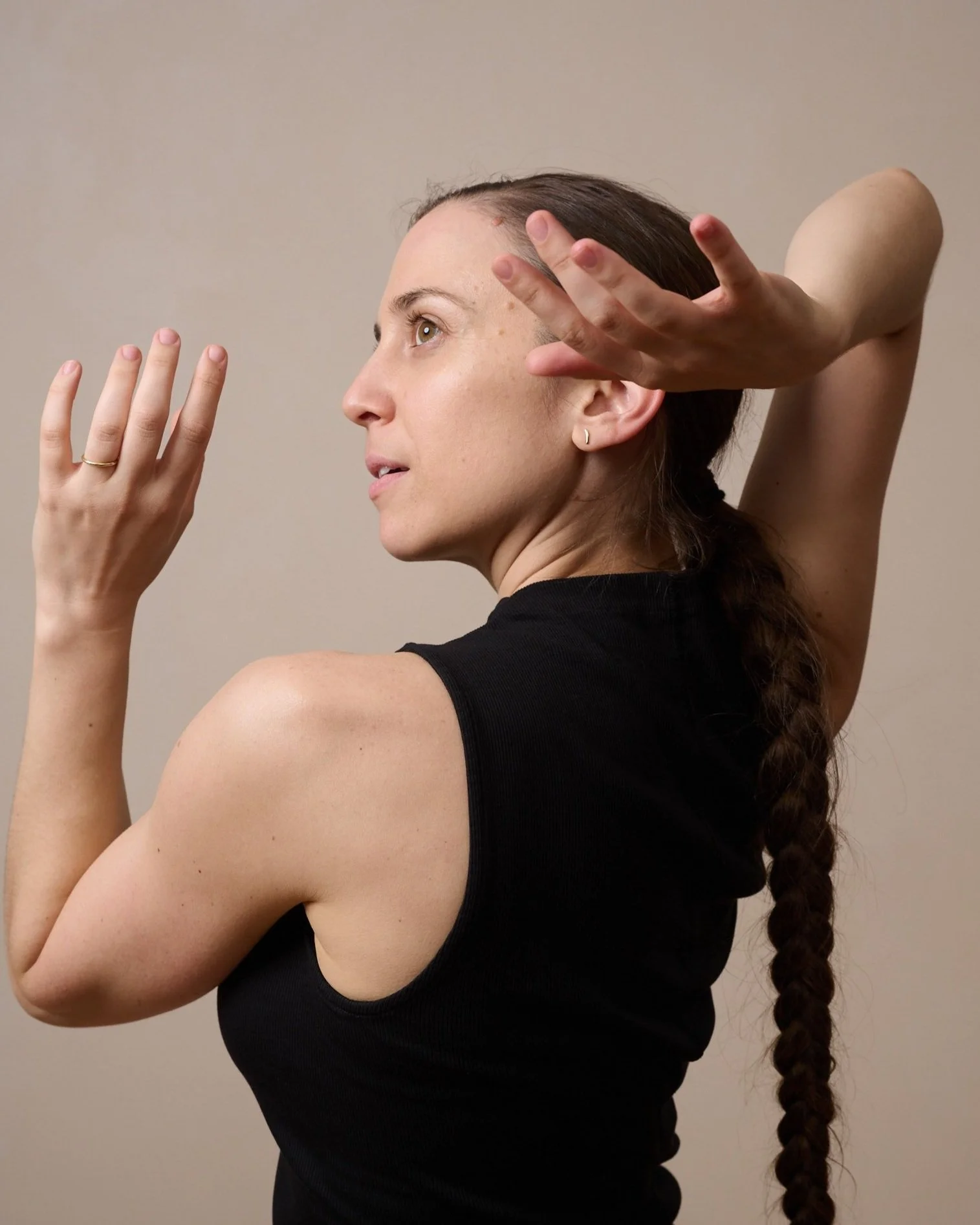
Nicole von Arx, dancer, choreographer, and Senior Pilates Teacher
Nicole, one of ERP’s Senior Pilates Teachers, puts it beautifully
Nicole, one of the longest-standing Pilates teachers in our community, who has very recently welcomed a baby girl, described this shift in a way that feels very familiar.
I’ve been practicing Pilates for over two decades, and it’s supported me through my entire dance career. But during pregnancy, it took on a completely new role. When everything in your body is changing and loosening, it felt crucial to strengthen the parts that would actually support me through delivery and postpartum. It gave me a sense of foundation in a moment that can feel pretty unknown. And beyond the physical, being at East River Pilates, I really felt held by the community.
When asked what showing up looked like for Nicole during that time, she said,
It meant staying consistent, but also being flexible with myself. Some days I felt strong and present, other days it was much more about just arriving and moving a little.
She also shared something that feels especially important to remember during postpartum.
Honestly, it wasn’t one big moment. It was a series of small ones. Feeling my deep core slowly come back, finding stability again, recognizing familiar sensations in my body. Those moments felt really powerful.
Valerie, one of our community members, is living this right now
Valerie is currently moving through pregnancy, and her experience brings a different, very present perspective.
When I found out I was pregnant, I knew I wanted to continue going to ERP, so I’m so glad the studio offers prenatal and postnatal classes. I’ve been going to ERP for two years now, and it’s the most consistent I’ve ever been with moving my body. I’m really grateful I’ve been able to continue during this time.
For Valerie, showing up has been about both physical strength and mental care.
It’s helped me feel so strong, and it’s also made me feel good mentally to know that I’m pouring into myself while experiencing all these changes.
She described her practice not as one big milestone, but something she returns to regularly. She’s currently taking Steph’s prenatal classes twice a week and describes them as the highlight of her week.
When asked what she would say to another parent in this stage, Valerie’s answer was simple and one that I fully resonate with.
Move your body. It’s so important to move and stretch. Your body is creating life, and that alone can be exhausting. But pouring into yourself is so important, so on those days when you wake up with a little bit of energy, go to ERP.
The Role of Community
Motherhood has a way of being both deeply connective and, at times, surprisingly isolating.
Having a space where you can move your body, take a breath, and not have to explain anything about where you are in your experience can make a real difference.
At ERP, we’ve always believed that the room itself is part of the practice, not just the exercises, but the people in it, the energy, and the feeling of being supported without needing to say much. Sometimes the most important part of showing up is simply not doing it alone.
Movement That Fits Real Life
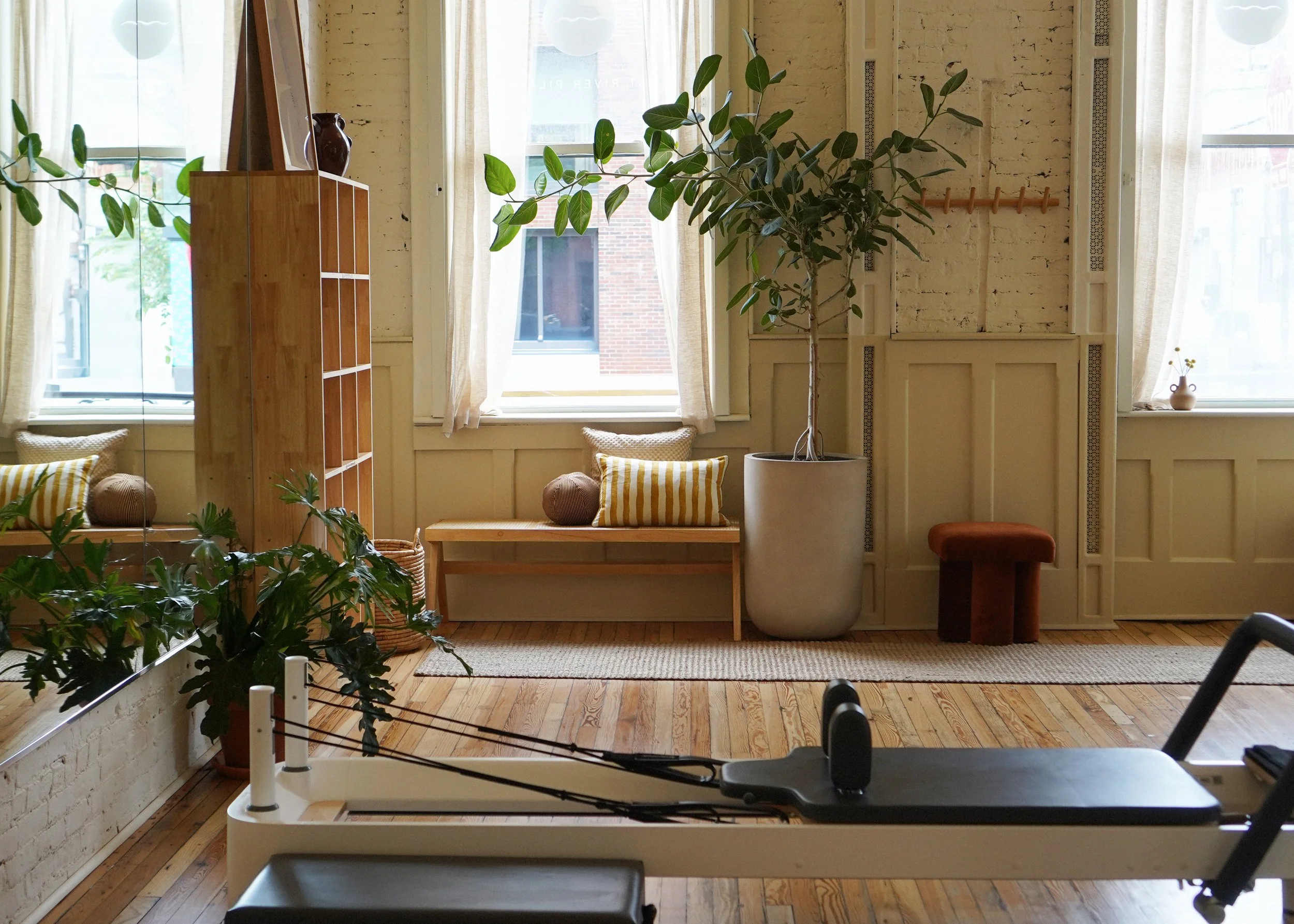
ERP West Street Location, where weekly Prenatal & Postnatal classes are held.
At a certain point, especially as life becomes fuller and more layered, your practice has to become realistic.
That might mean shorter classes, or logging into ERP Online for an on-demand workout, or a free virtual session while your baby naps. It might mean choosing a prenatal or postnatal class that meets your body where it is, or booking a Private when you need something more tailored and supportive. Some days might be Reformer, building strength and structure, while others might be Mat, something simple and grounding that you can take anywhere.
And some days, movement might just look like a walk outside. All of it counts. The goal isn’t to do everything. It’s to keep something going.
A Different Kind of Strength
There’s also a quieter shift that happens during this time, one that doesn’t always get named. Your definition of strength begins to change.
It becomes less about pushing harder or doing more, and more about patience, consistency, and knowing when to support yourself differently. Sometimes strength looks like rebuilding slowly. Sometimes it looks like choosing rest. And sometimes it looks like acknowledging that what you need, in your body or your life, is evolving.
For me, strength looks a little different these days, too. As I work toward my goal of 10 chin-ups by the time I’m 40, you’ll find me moving between Pilates and the gym, building strength in my core, arms, and lats. At the moment, I’m at three… with an itty bitty tippy-toe jump start. I’m counting it.
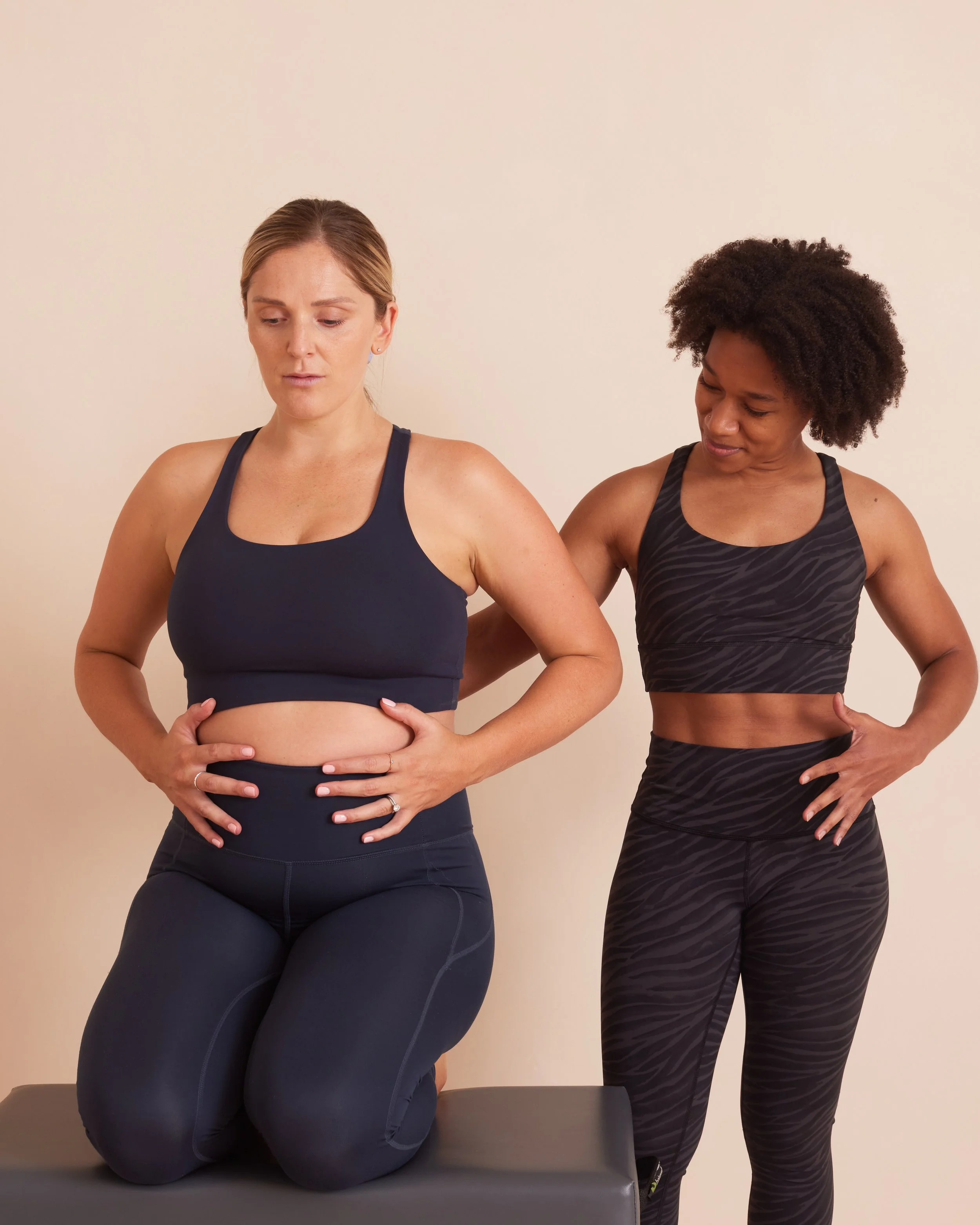
Talia, co-founder of SPRING Movement, and Anyeli, Pilates teacher, both part of the ERP forever dream team.
A New Direction in Work and Life
We’ve seen this shift extend beyond movement as well.
For many people moving through pregnancy and into motherhood, this season opens up a different way of thinking about time, work, and what feels meaningful. There’s often a desire for more flexibility, more purpose, and a schedule that can actually support the reality of daily life.
For some, that curiosity naturally deepens their relationship with Pilates. What starts as a personal practice becomes something they want to understand more fully, not just for themselves, but for others moving through similar experiences.
And for some, that leads to becoming a Pilates teacher.
It’s not just about teaching movement. It’s about staying connected to your practice, supporting others through similar transitions, and building work that can evolve alongside your life. t’s meaningful, people-centered work that allows you to support others in a very real, tangible way, and one of the things we’ve seen time and time again is how well it can fit into a life that doesn’t follow a traditional schedule. It can be flexible, part-time or full-time, and something that grows with you. And for many parents, that kind of alignment feels not just practical, but deeply supportive and rewarding.
If becoming a Pilates instructor is something you’ve ever been curious about, whether as a way to deepen your own practice or explore a new direction professionally, it’s a path worth learning more about. We partner with SPRING Movement to support this precise kind of training and career-transition, and their Mat Pilates certification is a beautiful place to begin.
Pilates Is a Practice That Stays With You
I’ll leave you with this. If you ask me, motherhood changes almost everything: your body, your time, your priorities, and your perspective, but it doesn’t take movement away. If anything, it gives it more meaning.
Pilates, especially during pregnancy and postpartum, can move with you through all of it, through preparation, through change, through rebuilding, and through the everyday moments in between. It doesn’t have to look the same as it once did, and it’s not meant to.
We look forward to moving with you again soon. Until then, if you’re celebrating Mother’s Day, or honoring a mother figure in your life, we hope you take a moment to appreciate the beauty of change and the many ways we grow into ourselves over time.
Warmly,
Kimmy
Supporting This Season Through Prenatal & Postnatal Training
For some people, this season of life doesn’t just shift how they move, it also shifts how they want to engage with their practice more deeply.
We’ve seen many mothers begin to think differently about their relationship to movement after having children, sometimes out of curiosity, sometimes out of necessity, and sometimes simply from a desire to better understand what’s happening in their own bodies. For those already in the movement space, or even those just beginning to explore it, learning how to support the body through pregnancy and postpartum can feel like a natural extension of that curiosity.
For many, this season doesn’t just change how they move, it deepens their desire to understand the body more meaningfully, which is why we’re proud to partner with SPRING Movement, whose Prenatal & Postnatal Certification is designed to help movement professionals, and anyone interested in deepening their understanding, confidently and safely support the body through this stage of life.
What we love most is that it doesn’t require you to be teaching, or even planning to teach. It can simply be a way to deepen your own practice, build awareness, and feel more connected to your body through a season that asks so much of it.
And for those who are interested in teaching, it offers a thoughtful, flexible pathway into supporting others with clarity and confidence.